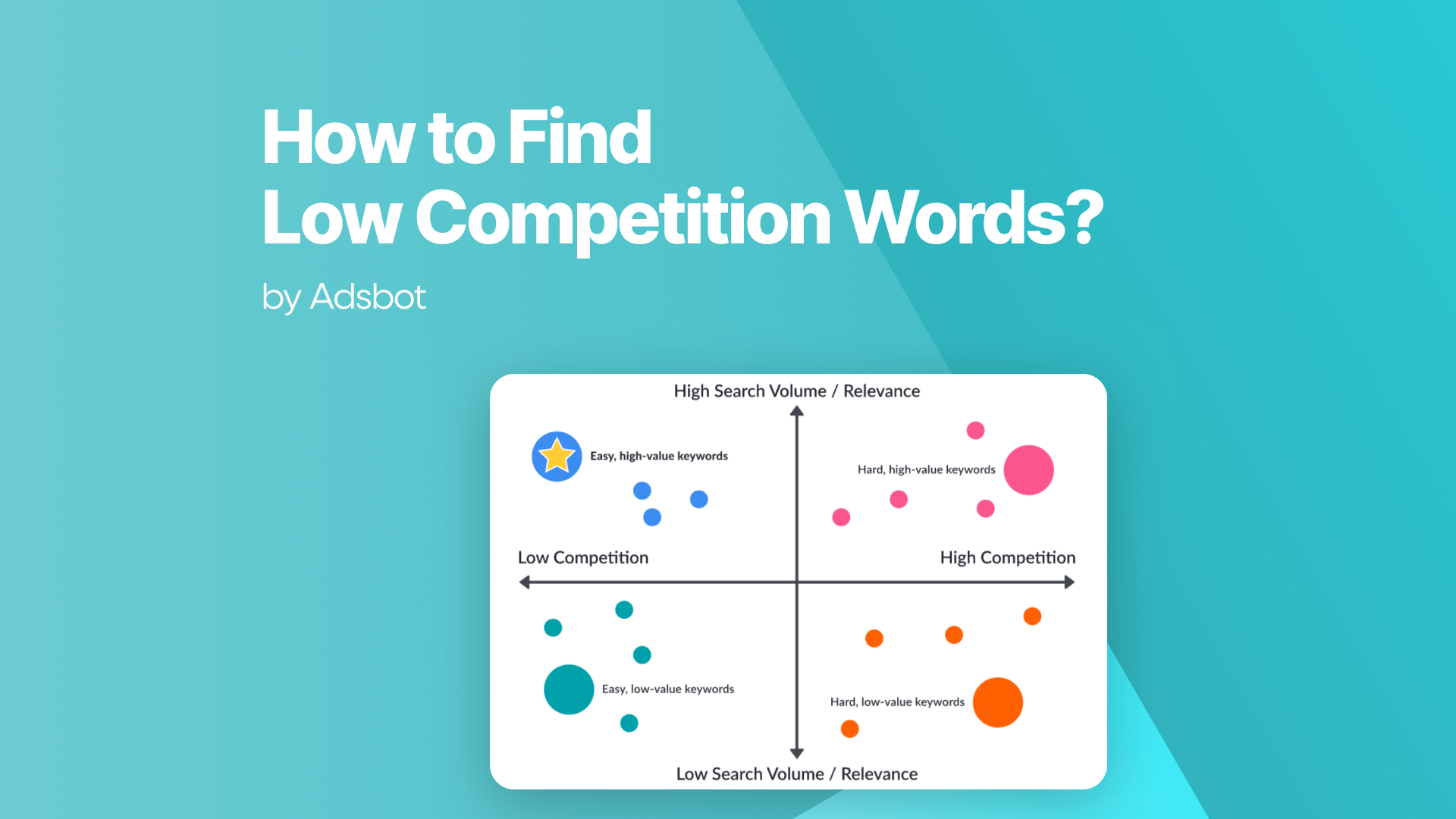
Finding low competition keywords used to be a simple math game. You found a term with decent volume, weak competition, and published a better post. That era is dead. We are now facing a Traffic Apocalypse where roughly 65% of Google searches end without a click. The game has changed because the board has changed.
Ranking #1 is no longer a guaranteed ticket to traffic. AI Overviews (AIOs) and rich snippets now answer users directly on the results page, stealing clicks from even the top positions. If your strategy relies solely on traditional rankings, you are fighting a losing battle.
The new goal isn’t just visibility; it is becoming the cited source inside those AI summaries. To survive, you must pivot from chasing vanity metrics and search volume to mastering intent-mapping. We aren’t just hunting for easy keywords anymore; we are hunting for the specific questions AI hasn’t learned to answer yet.
What are low competition keywords?
Low competition keywords are specific search queries that lack authoritative, high-quality answers. These terms represent a market gap where user intent is currently underserved, allowing smaller websites to realistically rank on the first page without needing massive backlink profiles.
For emerging sites, these keywords function as the Stepping Stone strategy. Google’s algorithm requires proof of expertise before granting visibility for competitive terms. By ranking for specific, lower-volume queries, you build topical authority layer by layer. You aren’t avoiding competition; you are choosing battles you can actually win to build the credibility needed for larger fights later.
Rigorous analysis requires looking beyond Keyword Difficulty (KD) scores. A tool may label a term easy, but if the top results are dominated by giants like The New York Times or government sites, the real-world competition is insurmountable. True opportunity looks like forums, Reddit threads, or thin content ranking in the top positions.
Why should you target these keywords instead of high-volume ones?
Targeting high-volume keywords like “CRM software” is effectively a suicide mission for a new domain. While strategies in The Google Ads Keyword Guide might suggest bidding on these terms, the organic SERPs are cemented by public companies with multi-million dollar ad budgets and domain authority you cannot match. Low competition keywords offer the only realistic fighting chance to secure real estate on page one within weeks rather than decades.
The strategic pivot here is prioritizing profit over vanity. High-volume searches are often vague and informational, whereas low-volume queries are specific and transactional. A user searching for “CRM for plumbing small business” has a problem they are paying to solve right now. Consequently, this high-intent traffic often converts 4.4x better than broad, casual organic visitors.
Predictability is your third asset. Ranking for competitive terms is a volatile, years-long battle with no guaranteed outcome. With low-competition terms, the feedback loop is tighter; you publish, index, and see results, allowing you to iterate quickly.
Do not underestimate the power of cumulative volume. A single high-volume ranking is a fragile single point of failure. Conversely, ranking #1 for 30 specific keywords that each bring in 50 visitors yields 1,500 highly targeted, stable users. This diversified portfolio approach immunizes your site against volatility.
How do AI Overviews and zero-click searches change the landscape?
An AI Overview (AIO) is a generative summary displayed at the top of search results, synthesizing data from multiple sources to answer a query directly. It effectively pushes organic blue links below the fold, often satisfying user intent without a click.
The Traffic Apocalypse isn’t hyperbole. Data suggests that for queries triggering an AIO, organic click-through rates (CTR) have plummeted by nearly 61%. If your low-competition keyword strategy targets simple definitions (e.g., “what is a keyword”), Google’s AI will answer it instantly. You get zero traffic. The landscape has shifted from a library to an answer engine.
To survive, you must pivot to Information Gain. The algorithm now favors content that adds something new to the knowledge graph, proprietary data, contrarian case studies, or personal “I tested this” narratives that an LLM cannot hallucinate or aggregate from Wikipedia. If your content merely summarizes existing articles, you are training the AI that will replace you.
The new victory condition is Position Zero, the citation within the AI response. We are no longer fighting for the #1 organic slot; we are fighting to be the trusted source the AI references to verify its answer. Winning here secures the high-intent verification click, where users visit your site not for the answer, but for the evidence and expertise behind it.
Where are the best places to brainstorm keyword ideas?
Most SEOs fail because they rely exclusively on tools that look backward. To find low competition keywords before they become competitive, you must look where conversations happen in real-time.
- Mining Niche Communities: Platforms like Reddit, Quora, and Discord are essentially unfiltered focus groups. Search for your broad topic and look for threads with high engagement but low-quality answers. If a user asks a specific question and the best reply is “I think maybe…”, that is a content gap. You can step in with an authoritative guide that validates the user’s struggle.
- People Also Ask (PAA): This is Google literally handing you the user journey. PAA boxes reveal the immediate follow-up questions users have. Clicking one question spawns three more, creating an “intent chain.” Targeting these specific, conversational phrases (e.g., “how to fix X without replacing Y”) often bypasses the need for high domain authority because you are answering a specific micro-intent.
- Internal Data (The B2B Goldmine): If you have access to sales calls or customer support tickets, you have better data than any tool. When a prospect asks, “Can this software handle 50,000 SKUs?”, they are using the exact language of their pain point. These “zero-volume” keywords are often high-value commercial queries that competitors ignore because tools show no traffic.
- TikTok and Social Search: Ignore this at your peril. For 60% of Gen Z, TikTok is the primary search engine. Trends often break here weeks before they register in keyword tools. Monitoring niche hashtags allows you to identify emerging problems and terminology, letting you publish content that is waiting for the inevitable Google search volume to arrive.
How to use professional keyword research tools effectively?
Keyword research tools are data platforms that aggregate search history to estimate query volume, competition levels, and trends. Whether you are learning How To Use Google Keyword Planner or using premium software, these tools function as directional compasses rather than an absolute truth, helping marketers filter millions of possibilities into a manageable list of targets.
A common rookie mistake is treating tool metrics as gospel. Semrush and Ahrefs are the industry heavyweights, but their true power lies in Competitor Gap Analysis. Instead of guessing what to write, you plug in a competitor with a similar domain authority. The tool reveals exactly which keywords they rank for that you don’t. This is reverse-engineering success; if a site as weak as yours is ranking, the door is open for you, too.
For budget-conscious creators, KeySearch and KWFinder are indispensable for bulk filtering. These tools excel at highlighting low-KD (Keyword Difficulty) gems within massive lists. KWFinder, in particular, is often praised for having difficulty scores that more accurately reflect the reality of niche SERPs compared to the bigger platforms.
Never outsource your judgment to an algorithm. A tool might assign a keyword a Difficulty of 0, but if the top result is a government health portal, you will not rank. Conversely, tools notoriously underreport volume for B2B terms. If a keyword shows 0 Volume but has a Cost-Per-Click (CPC) of $15, the tool is wrong, and the market is right. This alignment with PPC Keyword Research logic ensures you follow the money, not just the volume metric.
What are zero-search-volume and ultra-long-tail keywords?
Zero-search-volume (ZSV) keywords are specific, long-tail queries that keyword tools report as having 0 monthly searches, often due to data limitations or low search frequency. Despite the metric, these terms are frequently used by high-intent decision-makers close to a conversion point.
These keywords are the Hidden Gold of modern SEO. Tools rely on clickstream data, which often misses the granular queries of B2B buyers or niche hobbyists. A keyword like “best enterprise CRM for dental franchises” might show zero volume, but the three people searching for it every month are likely holding corporate credit cards. Zero volume usually means Zero Competitors, not zero traffic.
This strategy leverages Intent Density. The longer the query, the higher the likelihood of conversion. Ultra-long-tail keywords (4+ words) allow you to bypass the browsing phase and target users who know exactly what they need. For example, ranking for “machining tolerances for aerospace titanium” proves you are an industry specialist, not a content farm.
By blanketing these specific queries, you establish Topical Authority. You signal to Google that you possess deep, granular knowledge of the subject. This coverage is a critical EEAT signal, eventually lifting your rankings for the broader, competitive terms that generalist sites struggle to hold.
How do you validate if a keyword is truly low competition?
Keyword validation is the manual process of confirming that a keyword’s statistical opportunity matches the reality of the Search Engine Results Page (SERP). It involves checking for weak competitors and ensuring the user’s intent aligns with the content you plan to create.
Finding a keyword with low difficulty metrics is only the first step. You must verify it with the Keyword Golden Ratio (KGR). The formula is simple: divide the number of Google results that have the exact keyword in the title (allintitle: "your keyword") by the monthly search volume. If the result is under 0.25, you have found a gold nugget that effectively has no optimized competition. These terms can often rank in the top 10 within 48 hours, even for new sites.
However, math isn’t enough. You must perform a Manual SERP Analysis. Search the term in incognito mode. If you see forums like Reddit, Quora threads, social media posts, or outdated articles from 2018 in the top positions, you have found a green light. These are weak results that a comprehensive, well-structured guide can easily displace.
Finally, perform a User Intent Check. Does the user want to buy (transactional) or learn (informational)? If the SERP is full of e-commerce product pages and you are writing a how-to guide, you will not rank, regardless of your content quality. Google has already decided what type of content satisfies that query. Always consult a Keyword Research Checklist to ensure you don’t miss these subtle intent signals.
How to structure content to rank for these keywords?
Answer Engine Optimization (AEO) is the technical practice of formatting content to be easily parsed by AI models and featured snippets. It prioritizes direct answers over narrative buildup, ensuring algorithms can instantly extract the core value without parsing through fluff.
Structure is no longer just for readability; it is for machine comprehension. The most critical tactic is Answer-First formatting. Under every H2, answer the user’s specific question immediately in the first 40-60 words. Do not bury the lead. AI Overviews and voice search assistants prioritize succinct, factual paragraphs that can be lifted directly into a summary. Think of this as the inverted pyramid style of journalism applied to algorithms.
You must also break up walls of text. Use H3s and bullet points to create data-dense chunks. A low-competition keyword often signals a specific, granular problem; your content should look like a troubleshooting manual, not a philosophy essay.
Finally, speak the robot’s language. Implement Schema markup (specifically FAQ and Article schema). This hidden code explicitly tells Google, “Here is the question, and here is the answer,” drastically increasing your odds of being cited in a zero-click result. By spoon-feeding the algorithm structured data, you remove ambiguity and fast-track your content into the Knowledge Graph.
How to measure success in a zero-click world?
Zero-click metrics focus on brand visibility and influence rather than direct website traffic. This involves tracking how often a brand is cited in AI Overviews (Citation Share) and the quality of the traffic that does click through, such as time-on-page and conversion rate.
The era of traffic at all costs is over. In a zero-click ecosystem, your new primary KPI is Citation Share. Use tools to track how frequently your brand appears as a source in AI summaries, even if no click occurs. This digital share of voice is the new branding.
When users do click, they are often highly qualified. Stop obsessing over Sessions and start monitoring Engagement Rate and Return Visitor %. A user finding you via a specific, long-tail query who reads for five minutes is worth infinitely more than 1,000 bounce-heavy visitors from a broad, vanity keyword.
Conclusion: Building a timeless keyword strategy
Tools and algorithms will evolve, but the core mandate remains: satisfy user intent with undeniable expertise. Don’t chase trends; chase the specific, painful questions your audience is asking. By prioritizing deep, human-led answers over gaming the system, you build a fortress of authority that no update can dismantle.
Author:

Get 3x more revenue from the same ad spend.
Let our onboarding experts show you the power of AI-driven PPC optimization.
Start scaling today
Popular Posts
-
 How Many Keywords Should Be In an Ad Group in Google Ads?
For the vast majority of modern campaigns, the ideal number…
Read more -
 Google Ads Script for Dummies: An Introduction
Imagine you have an e-commerce website that sells licensed superhero…
Read more -
Google Ads Sitelink Character Limits
Your Google Ads are cutting off in the middle of…
Read more -
What Is Conversion Value in Google Ads?
What if you could put a price tag on every…
Read more

Register for our Free 14-day Trial now!
No credit card required, cancel anytime.