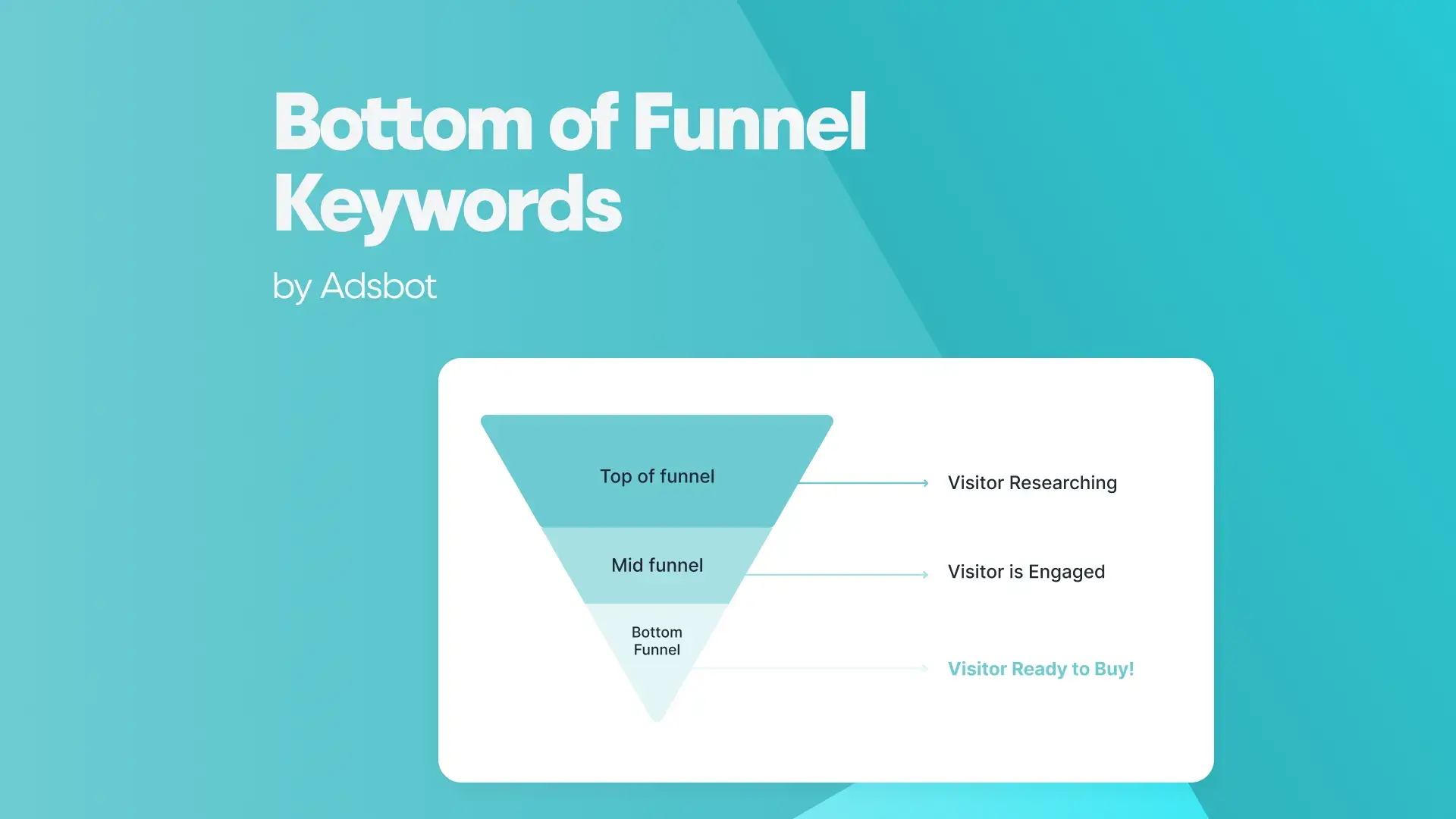
Bottom of Funnel (BoFu) keywords are the specific, high-intent queries users enter when they are on the verge of making a purchase. These aren’t just casual questions; they are the digital signals of immediate buyer intent, phrases like “best CRM for startups” or “HubSpot vs. Salesforce pricing.” They mean the user is done asking “What Is Keyword Bidding?” and is ready to decide.
Understanding this definition is critical because the search landscape is undergoing a seismic shift known as the Great Decoupling. While global search volume is surging toward 13.6 billion daily queries, the number of clicks clicking through to websites is dropping. Why? Because AI-generated summaries are increasingly answering questions directly on the search results page.
This shift signals that the era of chasing raw traffic is over. Modern SEO is about profitable growth. With 65% of purchase journeys still starting on search engines, the goal is no longer just to be visible; it is to be cited. We have entered the Answer Engine era, where winning means becoming the trusted source that AI models reference. If your content answers the final click questions effectively, you win the customer, even without the traditional website visit.
What are Bottom of Funnel (BoFu) Keywords?
Bottom of Funnel (BoFu) keywords are the precise, high-stakes queries users execute immediately before making a purchase decision. Unlike broad educational searches, these terms signal that a prospect has finished diagnosing their problem and is now rigorously vetting specific solutions. In the era of Answer Engines, these are more than just text strings; they are thematic intent signals that trigger agentic actions, such as real-time price checking or review summarization, within AI models. If your content lacks these specific signals, synthetic search agents simply cannot verify your relevance.
To effectively capture this revenue-driving traffic, content strategies must address three distinct categories of intent:
- Transactional Intent: These users have their credit cards in hand. They use explicit action verbs like “buy,” “subscribe,” “reserve,” or “hire.” The search is no longer about learning; it is about logistics and execution.
- Commercial Investigation: Here, the buyer has narrowed the field to a shortlist. They search for direct comparisons (e.g., “HubSpot vs. Salesforce”), “best of” lists, or specific attribute reviews. Your content must act as the tie-breaker in this high-stakes face-off.
- Conversion Intent: These queries seek a low-risk entry point into your ecosystem. Phrases like “free trial,” “live demo,” or “coupon code” indicate a willingness to engage directly with the product.
Mastering these categories allows you to move beyond vague brand awareness and target the specific moments where capital is deployed.
Why Should You Prioritize BoFu Keywords Over High-Volume Terms?
A conversion-focused keyword strategy prioritizes the quality of intent over the quantity of raw search volume. While top-of-funnel terms attract more visitors, bottom-of-funnel queries drive the actual revenue and pipeline growth for a business. This approach ensures that marketing efforts result in a higher return on investment by targeting users who are ready to convert immediately.
For years, marketing teams have chased vanity metrics and low Keyword Difficulty, high traffic numbers that look impressive on a dashboard but fail to impact the bottom line. This obsession with volume is fundamentally flawed in the current Answer Engine economy. The logic of ROI is mathematically undeniable: specific, high-intent BoFu pages convert at a rate nearly 25 times higher than broad, top-of-funnel informational content. A user searching for “what is a CRM” is effectively a casual browser, potentially months away from a purchase. In contrast, a user searching for “Salesforce vs. HubSpot enterprise pricing” is signaling immediate commercial intent. Prioritizing the latter ensures your resources are deployed where they generate revenue, not just noise.
Beyond simple economics, the psychological state of the modern buyer dictates this shift. We are living in an era of option paralysis, where 76% of consumers report feeling overwhelmed by the sheer volume of choices and data points. They don’t need more information; they need curation. By targeting BoFu keywords, your brand steps in as a decision partner rather than just another publisher. You aren’t just describing features; you are reducing the cognitive load required to make a purchase, effectively acting as a trusted advisor in the final mile of the journey.
Ultimately, successful SEO now hinges on intent density rather than aggregate traffic. A strategy built on high-volume terms often attracts tire kickers and students. Conversely, BoFu strategies target the dark funnel, the invisible, high-value researchers ready to act. Ten clicks from this ready-to-buy cohort are worth more to your pipeline than ten thousand clicks from casual researchers. Focus on the few who matter, not the many who don’t.
How Does AI Impact High-Intent Search Results?
Generative Engine Optimization (GEO) is the practice of structuring content so that artificial intelligence models can easily find, summarize, and cite it. This strategy focuses on making your brand the primary source for AI-generated answers provided directly on the search results page. Success is no longer measured by traffic volume, but by how often your expertise is cited by AI assistants.
The digital ecosystem has entered a Zero-Click Reality, where nearly 60% of searches end without a user ever visiting a website. Buyers are consuming synthetic answers generated directly on the SERP. This shift is powered by Query Fan-Out, a mechanism where AI breaks a single user prompt into multiple invisible sub-queries to verify facts across the web instantly. For a high-intent query like “best CRM for scaling,” the AI simultaneously checks pricing, reviews, and integrations across different sources before presenting a final summary.
Consequently, the traditional goal of ranking first is being replaced by the Citation Benchmark. Data shows that 92% of users do not click past the AI-generated summary. This means if your brand is not explicitly cited within that answer, you are effectively invisible to the buyer. To survive, marketing must pivot from creating content for humans to read to creating structured data that machines can quote. In the age of answer engines, citation is the new rank.
How Do You Find the Best BoFu Keywords for Your Business?
Traditional keyword research tools are often blind to the most profitable queries because they rely on historical volume data. While standard resources like The Google Ads Keyword Guide provide a foundation, to find high-intent keywords in the Answer Engine era, you must look where tools cannot: the live search results and your own proprietary customer data.
Start by analyzing Pixel 0 on the Search Engine Results Page (SERP). Before you open a keyword tool, manually search for your product category. If you see AI Overviews, comparison tables, or People Also Ask boxes, these are not just features; they are maps of intent. Note the specific phrasing AI uses to summarize the category. Furthermore, look for third-party review sites like G2 or Capterra ranking in the top positions. These platforms dominate BoFu searches because they offer unbiased validation. If AI models trust these sources, your content strategy must mimic their comparative structure to compete.
Next, you must mine the Dark Funnel, the rich repository of customer data that exists outside of public search metrics. Your most valuable keyword research tool is not software; it is your sales team. Analyze transcripts from sales calls and demos to identify the specific objections and questions prospects ask right before signing a contract. These questions, often specific and technical, are the exact queries they are typing into search engines. Similarly, review your internal site search logs and customer support tickets. If users are searching your help center for “integration with X” or “export limit,” these are high-value BoFu keywords you should be targeting publicly.
Finally, refine your strategy using Google Search Console (GSC), but flip the traditional logic. Ignore the high-impression, low-click terms. Instead, filter for queries with low impressions but abnormally high Click-Through Rates (CTR). A keyword with only 20 impressions but a 15% CTR represents a sniper intent, a user who knew exactly what they wanted and found it immediately.
Don’t forget to audit specialist communities like Reddit and Quora. AI models heavily weight these platforms as human knowledge sources. Find the specific questions being asked in your industry’s subreddits; these thread titles are often the exact long-tail keywords your buyers use when they want unfiltered truth rather than marketing copy.
How Should You Structure Your BoFu Content for Maximum Conversions?
To convert high-intent traffic in the age of AI, you must abandon traditional storytelling arcs. Instead, adopt Answer-First Formatting. This structure places the direct solution to the user’s query at the very top of the page, the BLUF (Bottom Line Up Front). For a BoFu query like “best enterprise CRM,” do not bury the answer under 500 words of history. State the recommendation immediately. This not only serves the user’s need for speed but also specifically caters to Large Language Models (LLMs), which prioritize information found early in the content hierarchy.
Structure your page using a modular strategy designed for extraction. Every core section should begin with a Citation Block, a concise, 40-60 word summary that defines the concept or answers the heading’s question directly. These distinct blocks act as handles for AI crawlers, allowing them to lift clean, fact-rich snippets into their generated answers. If your answer is buried in a long paragraph, you risk being summarized incorrectly or ignored entirely.
For commercial investigation queries, visual structure is data structure. Use HTML comparison tables rather than prose to contrast features and pricing. AI models thrive on structured data; a table provides unambiguous relationships between entities (e.g., “HubSpot” vs. “Price”). This clarity increases the likelihood of your data appearing in Pixel 0 comparison widgets.
However, structure alone is not enough; you must prove authority. To meet Google’s E-E-A-T standards and differentiate from generic AI-generated content, infuse every section with Experience signals. Use specific qualifiers like “In our analysis of 147 campaigns…” or “After testing this feature for 30 days…” Proprietary data and first-hand anecdotes are the only moat against synthetic content commoditization.
Finally, underpin this visible structure with invisible technical foundations. Implement Product, Review, and FAQ schema markup to explicitly tell search engines what your content represents. In the “Answer Engine” era, clear “entity clarity” is essential; if an AI cannot easily discern your value proposition, it cannot recommend you.
How Do You Measure the Impact of BoFu Keywords Beyond Clicks?
In the post-click economy, relying solely on Google Analytics will leave you blind to your true market impact. We must pivot to Visibility-First Metrics, a comprehensive framework that measures brand influence across synthetic search surfaces rather than just website sessions. Unlike traditional volume metrics, these indicators track how often your brand is recommended by AI agents, offering a complete picture of trust even when a click never occurs.
To accurately gauge performance in the AI era, prioritize Share of Model over Share of Voice. This new KPI quantifies the frequency with which your brand is cited as the primary solution across large language models like ChatGPT, Perplexity, and Gemini. A high Share of Model proves that your structured data has successfully trained the algorithm to recognize your authority. Simultaneously, track Assist Impressions, the instances where your brand appears in the follow-up dialogue of a conversational search. These critical mentions often validate a buyer’s choice moments before conversion, serving as the digital equivalent of word-of-mouth referral.
Crucially, look for Direct-to-Brand Migration in your search console data. A successful BoFu strategy often results in flat organic traffic but surging branded search volume, shifting the balance of Branded Vs Non Branded Keywords traffic. This trend underscores the golden rule of modern SEO: Traffic ≠ Revenue. A strategy that sacrifices thousands of low-quality visits to secure a handful of high-value citations is not losing; it is optimizing for profit.
Conclusion
The bottom of the marketing funnel is no longer a static webpage; it has evolved into a dynamic, conversational state where buyer intent meets immediate synthetic verification. In this new paradigm, your role is not merely to be a publisher, but to become the definitive Decision Partner. By optimizing for Answer Engines and structuring your expertise into modular, machine-readable formats, you ensure that your brand is the one offering the solution when the final decision is made.
The mandate for the future is clear: stop fighting for the click and start fighting for the citation. You must build a content ecosystem that is quote-ready, fact-dense, and trusted by the models that now mediate commerce. The brands that will dominate the next decade are those that adapt to being callable by AI agents, not just crawlable by search spiders. If you can answer the final question with precision, you won’t just win the search result, you will win the revenue.
Author:

Get 3x more revenue from the same ad spend.
Let our onboarding experts show you the power of AI-driven PPC optimization.
Start scaling today
Popular Posts
-
 How Many Keywords Should Be In an Ad Group in Google Ads?
For the vast majority of modern campaigns, the ideal number…
Read more -
 Google Ads Script for Dummies: An Introduction
Imagine you have an e-commerce website that sells licensed superhero…
Read more -
Google Ads Sitelink Character Limits
Your Google Ads are cutting off in the middle of…
Read more -
What Is Conversion Value in Google Ads?
What if you could put a price tag on every…
Read more

Register for our Free 14-day Trial now!
No credit card required, cancel anytime.